Guided walk in Kibera, Nairobi
Walk Kibera with Susan — where community, commerce, and Bitcoin meet on the street.
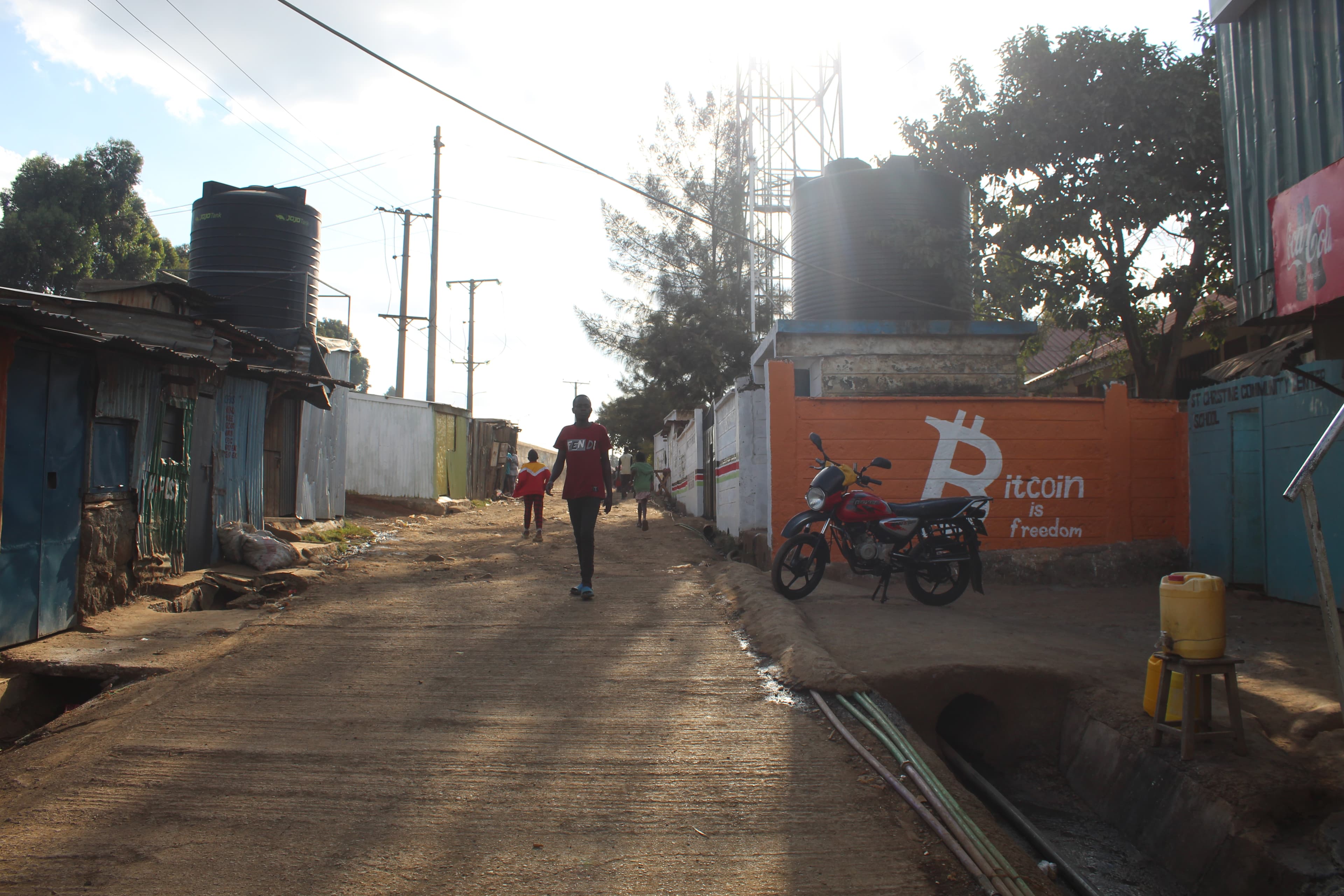
Kibera is home to over half a million people. It is not a backdrop. It is where people build businesses, raise families, and quietly pioneer one of Africa's most active Bitcoin circular economies. Susan has lived and worked here for years. She leads this walk so visitors can understand what they are actually seeing.
Six stops in Soweto West
We start at Adams Greenhouse, move through merchants and community spaces in one of Africa's most active Bitcoin circular economies, and close with a debrief over drinks.
No Bitcoin knowledge required
You can arrive knowing nothing. Lightning is explained through a live payment at a food stand — not through a presentation or a whitepaper.
Walk at a glance
Nairobi context, Kibera streets, local merchants, practical Bitcoin education.
Start
Adams Greenhouse
Pace
Easy walk with regular stops
Payment
Only after confirmation
Duration
3 hours
Meeting point
Adams Greenhouse
Pricing
Agreed on request, depending on the route
Group size
Small groups, up to 6 guests
How the walk unfolds
A route you can picture before you arrive
The route is not improvised. Six stops, each with a specific purpose: context, a live payment, a service business, a community conversation, and a proper debrief. Here is what each stop actually looks like.
See all six stopsStop 1
Adams GreenhouseMeet-up and wallet setup
We meet at Adams Greenhouse on the edge of Kibera. I run a short safety briefing, share the shape of the walk, and give context on what Soweto West actually is — one of the eleven villages that make up Kibera, and the one where Bitcoin adoption has been growing since 2022. If you need a Lightning wallet, we set one up here before we walk.
Brief history of Kibera and how the Afribit circular economy began
Stop 2
Food vendor, Soweto WestChapati stand and tea
We stop at a local food stand — a proper one, not arranged for tourists. You can buy a snack or tea using Lightning and watch how a vendor scans a payment from their phone. The vendor may tell you they keep some sats rather than convert immediately. That choice, and the reasoning behind it, is worth understanding.
Live Lightning payment at a working merchant — scan and confirm
Stop 3
General essentials shopThe neighbourhood duka
A duka is the everyday shop where Kibera residents buy soap, airtime, cooking oil, flour. We visit one that accepts Bitcoin. The shopkeeper here has been through the Afribit training program and will explain, plainly, how they think about holding sats versus shillings depending on the week.
Buy a basic item — airtime, soap, or similar — using sats
Stop 4
Local barber or salonBarber or service business
Service businesses tell a different story than product merchants. A barber who accepts Bitcoin is thinking about repeat customers, tips, and whether a payment can arrive before the client even sits down. This stop shifts the rhythm of the walk and usually generates the most direct conversation.
One guest can pay for a small service; others observe
What visitors take away
What you carry with you after the walk
After the walk, guests consistently say the same thing: they understood Bitcoin more clearly from one chapati purchase than from anything they had read. They also leave with a more honest picture of what Kibera actually is.
Guided by someone who lives here
Susan is not an outside interpreter. She has been part of this community for years and guides the walk through direct relationships, not rehearsed scripts.
Bitcoin through real purchases
You will scan a QR code at a food stand, talk to a barber who saves in sats, and see how Lightning payments work for merchants who cannot afford M-Pesa fees.
Small group, honest pace
No rushing. No performance. The walk is designed to give you room to ask questions, listen carefully, and understand what you are looking at.
Money that moves differently here
Kibera has over 40 merchants accepting Bitcoin. That did not happen by accident. The walk shows you how it grew, who drove it, and what it means for people without bank accounts.
Susan's story
The story should feel human before it feels technical
Susan has spent years working in Kibera — in community education, in Bitcoin adoption, and in helping visitors encounter the neighbourhood honestly. She built Sats4Safari because she wanted guests to leave with context, not just impressions.
I have lived and worked in Kibera for years. I built Sats4Safari because I wanted visitors to encounter this community honestly — not through the lens of poverty tourism, and not through a polished pitch. The walk is my attempt to offer something more useful: direct experience, real context, and space to think.
Meet SusanSusan's perspective
Community first. Education through real examples. Respect before spectacle.
My work in Bitcoin education came out of watching what Afribit was building in Soweto West — seeing garbage collectors taught to use Lightning wallets, then teaching their neighbours, then those neighbours teaching theirs. That peer-to-peer model is not a quirk. It is the reason adoption has held. I got involved because I believed in the approach and wanted to help connect that story to the visitors who were already curious about it.
Principle
Community first, not spectacle
Principle
Education through real examples
Principle
Respectful storytelling with local context
Bitcoin in Kibera
Why Bitcoin in Kibera matters
Bitcoin came to Kibera in 2022 through a waste management program run by Afribit — garbage collectors were paid in sats and trained to teach their neighbours. By 2025, over 40 merchants in Soweto West accept Bitcoin, more than 600 people have been trained, and the model has been covered by the BBC, AP, and Forbes. The walk takes you into that story at ground level.
Merchant story
The vegetable stand
Dotea Anyim runs a roadside vegetable stall in Soweto West. Around 10% of her customers pay in Bitcoin. She prefers it: "It is cheap and fast and doesn't have any transaction costs. When people pay using bitcoin, I save that money and use cash to restock vegetables." That saving habit matters. It is Bitcoin as a financial tool, not just a payment method.
Merchant story
The neighbourhood duka
For a small shop selling soap, airtime, and flour, the economics are tight. M-Pesa fees are free below 100 shillings, but rise quickly after that. Lightning transactions are free regardless of amount. For a merchant turning over dozens of small sales per day, the difference compounds. Some hold sats. Some convert immediately. The conversation about which to do is happening every day.
Merchant story
The service business
A barber or salon accepting Bitcoin is navigating something slightly different — repeat customers, tips, and the social expectation of immediacy. Bitcoin settlement is instant. There is no float period, no dispute risk, no waiting for funds to clear. For a one-person service business, that simplicity has real value.
Questions before booking
Practical details, kept simple
Is Kibera safe for visitors?
The walk is guided by someone who lives and works in Kibera. Susan knows the routes, the people, and the rhythm of the neighbourhood. This is not an improvised slum tour — it is a structured visit built around relationships, and the merchants and community members you meet have agreed to be part of it.
How much walking is involved?
Around three hours at a comfortable pace with regular stops. The terrain is uneven in places — ordinary streets and pathways, not manicured footpaths. Flat shoes with grip are better than sandals. You will not be rushed.
Is photography allowed?
Photography is welcome in most settings, but Susan will guide you on when to ask permission and when to put the camera away. The merchants and community members you visit are people at work, not subjects. That distinction shapes how the walk is run.
Ready to explore Kibera with Susan?
Come walk Kibera with Susan. One of the most honest, grounded things you can do in Nairobi.
Start with a WhatsApp message. Confirm the date, ask your questions, and get a payment link once everything is arranged. No money moves before you know exactly what you are booking.